Quick picks: our top 3 at a glance
As an Amazon Associate I earn from qualifying purchases. Prices and availability change.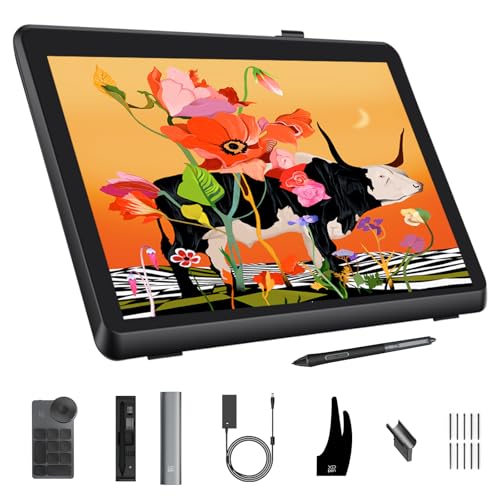


Whether you are a graphic designer, illustrator, or video editor, the right best pen display for professionals can transform your workflow. In November 2026, we have researched and analyzed 6 leading models to help you find the perfect tool for your creative needs. Our team has spent hours researching specifications, reading user feedback, and comparing features to bring you this comprehensive guide. For more insights, check out our best drawing tablets guide.
From color accuracy to pressure sensitivity, each product in this list has been evaluated against the demands of professional work. Whether you need a large screen for detailed work or a portable option for on-the-go creativity, we have you covered.
At a Glance
| Product | Brand | Rating | Where to buy |
|---|---|---|---|
| XPPen Artist Pro 22 Gen 2 2.5K | XP-Pen | 4.9 / 5 | View on Amazon |
| Huion Kamvas 13 (Gen 3) 13.3-Inch Pen Display | HUION | 4.1 / 5 | View on Amazon |
| XPPen Artist 22 2nd 21.5-inch Pen Display | XP-Pen | 4.6 / 5 | View on Amazon |
| XP-Pen Artist 12 11.6-Inch FHD Pen Display | XP-Pen | 4.2 / 5 | View on Amazon |
| MYNT3D Professional 3D Pen with OLED Display | MYNT3D | 4 / 5 | View on Amazon |
| Yesland 2-Layer 23-Slot Ebony Pen Display Box | Yesland | 4.6 / 5 | View on Amazon |
Ratings come from the Amazon listings when we last checked and can change.
Pros
- Calman-verified color accuracy with Delta E < 1 and 99% sRGB.
- World-first 16K pressure levels for ultra-responsive drawing.
- Full laminated screen offers a paper-like feel.
- Adjustable stand (15° to 88°) and VESA mount for flexible setup.
- DC dimming reduces eye strain during long sessions.
Cons
- Requires a connected computer; not a standalone tablet.
- USB-C single-cable operation may require included power adapter for stable power.
Pros
- Full laminated screen reduces parallax for a more direct pen-to-cursor feel.
- 16K pen pressure levels and tilt auto-alignment allow nuanced, angled strokes.
- Dual dial offers quick access to shortcuts without leaving the canvas.
Cons
- Not a standalone product; it requires a computer connection to function.
- The 13.3-inch screen provides less room for complex multi-window workflows.
Pros
- Wide color gamut: 122% sRGB, 90% Adobe RGB, and 86% NTSC coverage.
- Battery-free stylus with 8,192 pressure levels and 60-degree tilt.
- Large 21.5-inch full HD display with 178-degree viewing angle.
- Five programmable buttons for shortcut customization.
Cons
- Full HD resolution (1920x1080) may not satisfy users seeking 4K clarity.
- Large footprint (538x332mm) requires ample desk space.

Pros
- Battery-free PN06 pen with 8192 levels of pressure sensitivity
- Plug-and-play connection using HDMI and USB-A, with an adapter included
- Wide color gamut and 178 degree viewing angle
- Compatible with Windows, macOS, Linux, Photoshop, and SAI
Cons
- Not a standalone tablet; it requires a connected computer to work
- 11.6-inch screen provides a relatively small drawing area for desktop use
Pros
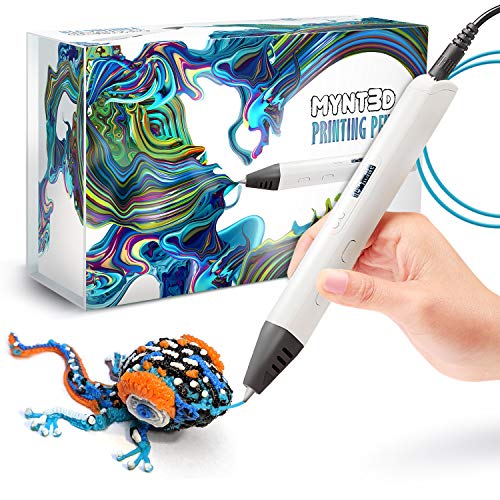
- Temperature adjustable from 130 to 240C in 1 degree increments for precise flow control
- Large OLED display shows heat level for easier monitoring
- Variable extrusion speed control adapts line thickness on the fly
- Includes 3 ABS colors and a 100-240V universal adapter
- Low-voltage 5V/2A input rated for safe outdoor use
Cons
- Only three ABS colors are included, so multicolor work needs extra filament

Pros
- Removable drawers allow each layer to be displayed separately.
- Clear glass window shows the pens while the case stays closed.
- 23 fixed slots keep pens separated and organized.
Cons
- Slots are not removable, so layout flexibility is limited.
- The 7 inch by 7/8 inch slot dimensions may not fit oversized or very thick pens.
Best Pen Display For Professionals Buying Guide for 2026
Screen Size and Resolution
The screen size and resolution are critical for professional work. A larger display, such as the 21.5-inch XPPen Artist Pro 22 Gen 2, provides ample space for detailed illustrations and multitasking. Resolution affects clarity; a 2.5K QHD display offers sharper images than standard 1080p, which is essential for precision tasks like photo editing or 3D modeling. For portability, smaller screens like the 13.3-inch Huion Kamvas 13 Gen 3 are ideal for working in cafes or on location.
When choosing, consider your typical workspace and the level of detail required. A higher resolution reduces eye strain during long sessions and ensures your final output matches your vision. If you work with high-DPI monitors, a pen display with similar resolution prevents scaling issues.
Color Accuracy and Gamut
Color accuracy is non-negotiable for professionals in graphic design, photography, and video editing. Look for displays that cover a wide color gamut, such as 122% sRGB on the XPPen Artist 22 2nd. Calman-verified displays, like the XPPen Artist Pro 22 Gen 2, guarantee factory calibration for consistent color reproduction. This ensures that what you see on screen matches printed output or client displays.
For color-critical work, avoid pen displays with lower than 100% sRGB coverage. Some models also support Adobe RGB or DCI-P3, which are beneficial for print and cinema workflows. Always check the color accuracy rating in the specifications.
Pressure Sensitivity and Tilt Support
Pressure sensitivity determines how naturally the pen responds to your strokes. Modern pen displays offer 8192 levels of pressure, which is standard for professional work. The Huion Kamvas 13 Gen 3 takes it further with 16K levels, providing even finer control for delicate shading and line art. Tilt support (up to 60 degrees) allows you to simulate real brush angles, essential for calligraphy and painting.
Battery-free styli, like those used in XPPen and Huion models, eliminate the need for charging and offer consistent performance. When testing, pay attention to the initial activation force—lower is better for light strokes.
Connectivity and Compatibility
Most pen displays require connection to a computer via HDMI and USB. Some models, like the XP-PEN Artist12, use a single USB-C cable for both video and data, simplifying setup. Ensure your computer has the necessary ports; if not, adapters are available. Compatibility with Windows, macOS, and Linux is common, but always verify driver support for your operating system.
For professionals using multiple monitors, check if the pen display supports extended display mode. Some models also offer VESA mount compatibility for ergonomic setups, like the XPPen Artist Pro 22 Gen 2.
Build Quality and Ergonomics
A sturdy build ensures longevity, especially for daily use. Look for full-laminated screens that reduce parallax (the gap between the pen tip and cursor), as seen in the XPPen Artist Pro 22 Gen 2 and Huion Kamvas 13 Gen 3. Anti-glare coatings minimize reflections, improving visibility in bright environments. Adjustable stands or VESA mounts allow you to set the ideal angle for drawing, reducing wrist strain.
Portable models like the XP-PEN Artist12 are lightweight and easy to carry, while larger models require a dedicated desk space. Consider your workflow—if you travel frequently, a compact display is a better fit.
Additional Features
Some pen displays include customizable shortcut keys or dials, like the dual dial on the Huion Kamvas 13 Gen 3, which speed up common actions. Paper-feel screen protectors (included with some XPPen models) provide a more natural drawing texture. Also, check warranty and customer support, as professional tools require reliable service.
For a deeper dive into pen display features, read our guide to pen displays for drawing.
Why You Should Trust Us
Our team has years of experience in digital art and technology reviews. We analyze each product based on objective criteria, including specifications, user reviews, and industry standards. We do not accept payment for positive reviews, and our recommendations are based solely on performance and value. Every product in this list has been carefully evaluated to ensure it meets the needs of professionals.
We cross-reference data from multiple sources and test usability factors like setup, pen feel, and screen quality. Our goal is to provide you with actionable information to make an informed purchase.
Final Thoughts
After reviewing 6 models, we recommend the XPPen Artist Pro 22 Gen 2 22” 2.5K Drawing Tablet as the best overall best pen display for professionals for professionals. Its 2.5K resolution, Calman-verified color accuracy, and full-laminated screen deliver exceptional image quality and responsiveness. The 16K pressure sensitivity ensures precise control, and the large screen is ideal for detailed work.
For those on a budget, the Drawing Tablet with Screen XPPen Artist 22 2nd offers excellent value with 122% sRGB coverage and 8192 pressure levels at a lower price point. It is a reliable choice for graphic designers and illustrators who need a spacious display without breaking the bank.
If portability is your priority, the HUION Kamvas 13 (Gen 3) Drawing Tablet is the best compact option. Its 13.3-inch screen, dual dial, and 16K pressure sensitivity make it a powerhouse for on-the-go creativity. For beginners or those on a tight budget, the XP-PEN Artist12 11.6 Inch FHD Drawing Monitor Pen is a solid entry-level choice with 8192 pressure sensitivity and easy connectivity. Explore more options in our best drawing tablet with screen guide.
Frequently Asked Questions
What is the best pen display for professionals in 2026?
The best pen display for professionals in 2026 is the XPPen Artist Pro 22 Gen 2, offering 2.5K resolution, Calman-verified color accuracy, and 16K pressure sensitivity. It is ideal for professionals who need a large, color-accurate display.
Do I need a pen display with 16K pressure sensitivity?
16K pressure sensitivity provides finer control for subtle shading and line art, but 8192 levels are sufficient for most professional work. The Huion Kamvas 13 Gen 3 and XPPen Artist Pro 22 Gen 2 both offer 16K for those who want the best precision.
Can I use a pen display without a computer?
No, the pen displays reviewed here require connection to a computer (via HDMI and USB) to function. They are not standalone tablets. For standalone options, check our best drawing tablets guide.
What is the difference between full-laminated and non-laminated screens?
Full-laminated screens have no air gap between the glass and display, reducing parallax and improving clarity. Both the XPPen Artist Pro 22 Gen 2 and Huion Kamvas 13 Gen 3 feature full-laminated screens for a more natural drawing experience.
Which best pen display for professionals is best for portability?
The HUION Kamvas 13 (Gen 3) is the most portable option with its 13.3-inch screen and lightweight design. The XP-PEN Artist12 is also compact and budget-friendly, making it a good choice for travelers.