Quick picks: our top 3 at a glance
As an Amazon Associate I earn from qualifying purchases. Prices and availability change.


If you are an artist who loves Procreate, you know the app is an iPad exclusive. That means the pen display you choose must work with your iPad, or you need a setup that bridges the gap. In November 2026, we have analyzed 5 of the best of – Expert Picks on the market, focusing on models from XP-Pen, Wacom, XENCELABS and more and others. Our goal is to help you find a display that feels natural, reduces glare, and offers the pressure sensitivity you need for detailed work. Whether you are a hobbyist or a professional, this guide breaks down the key specs and features to consider.
Before we dive into the list, it is important to understand that not all pen displays are created equal. Some are designed for desktop use with Mac or PC, while others are portable and may work with tablets. Since Procreate runs on iPad, you need to verify compatibility. For a broader look at how pen displays compare to other options, check our guide on pen display vs. pen tablet. Now, let us explore the top picks.
At a Glance
| Product | Brand | Rating | Where to buy |
|---|---|---|---|
| XP-Pen Artist 12 Pro 11.6" Full-Laminated Drawing | XP-Pen | 4 / 5 | View on Amazon |
| XP-Pen PA2 8192 Pressure Battery-Free Stylus | XP-Pen | 4 / 5 | View on Amazon |
| Wacom One 13.3-inch Creative Pen Display | Wacom | 4.9 / 5 | View on Amazon |
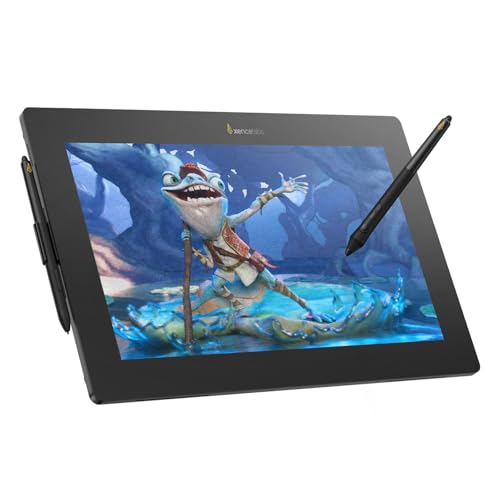
| XENCELABS Pen Display 16 Lite 16" 4K OLED | XENCELABS | 4.8 / 5 | View on Amazon |
| YOUPECK Active Stylus Pen with LED Display | YOUPECK | 4 / 5 | View on Amazon |
Ratings come from the Amazon listings when we last checked and can change.
Pros
- Fully-laminated display eliminates parallax for precise cursor placement
- Battery-free stylus with 8192 pressure levels and 60-degree tilt support
- Red Dial and 8 customizable express keys enhance workflow efficiency
- Anti-glare screen reduces reflections for comfortable long sessions
Cons
- Requires connection to a host computer; cannot function as a standalone tablet
- Limited to 11.6-inch screen size, which may feel cramped for some users
Pros
- Battery-free design allows uninterrupted drawing without charging.
- 8192 levels of pressure sensitivity capture fine detail and nuance.
- 60-degree tilt function enables smooth, natural shading without software adjustments.
Cons
- Only compatible with five specific Artist Pro models, not with other XP-Pen tablets or brands.
- Package includes only the stylus, no extra nibs or pen stand.
Pros
- 13.3-inch HD display with full color spectrum
- Compatible with Mac, PC, and Chromebook
- Works with any drawing, editing, or note-taking software
- Customizable pen button for shortcuts like undo and copy/paste
Cons
- 2019-generation model may lack features found in newer Wacom displays
- 4.5-pound weight makes it less convenient for frequent travel
Pros
- 4K OLED display with 1.07 billion colors for exceptional color accuracy
- Fanless design keeps the tablet cool and silent during long sessions
- Ultra-lightweight and thin (1.21kg, 12mm) with single USB-C for easy portability
- Dual battery-free pens with 3g to 500g pressure sensitivity for versatile drawing styles
- Super AG Etching anti-glare surface reduces reflections and provides a paper-like feel
Cons
- No physical shortcut buttons on the display (button-free design may not suit all workflows)

Pros
- LED display shows the battery percentage in real time, so you can recharge before it dies.
- Dual-mode universal design works across iPad, Android, Samsung, iPhone, and Switch with no Bluetooth pairing.
- Tilt sensitivity and a 1.5mm fine tip enable natural shading and precise strokes in drawing apps.
- USB-C fast charging delivers a full day of use from about 50 minutes of charging.
Cons
- You must select Mode 1 for iPad and Mode 2 for other devices; using the wrong mode means the pen will not work correctly.
- Line variation comes from tilt rather than pressure sensitivity, which may limit artists used to pressure-controlled strokes.
Best Of – Expert Picks Buying Guide for 2026
Choosing the right pen display for Procreate involves more than just picking the biggest screen. You need to consider device compatibility, screen quality, pressure sensitivity, and even the stylus that comes with it. Here are the key criteria we used to evaluate these products.
Device Compatibility and Connectivity
The first thing to check is whether the pen display works with your iPad or computer. Procreate is an iPad app, so if you plan to use it with a pen display, the display must support iPadOS. However, many pen displays are designed for Windows or macOS. The Wacom One HD, for example, works with Mac, PC, and Chromebook, but the listing does not mention iPad. The XPPen Artist12 Pro supports Windows, macOS, ChromeOS, and Linux, but again, no iPad mention. The XENCELABS Pen Display 16 Lite lists Windows, macOS, and Linux, but not iPad. If you intend to use Procreate on an iPad, you may need to use a stylus like the YOUPECK Active Stylus, which is designed for iPad and Android tablets. Always check the product specifications for compatibility before purchasing.
Connectivity is also crucial. Look for displays that offer USB-C, HDMI, or DisplayPort connections. Some models, like the XENCELABS 16 Lite, feature single USB-C cable connectivity, which simplifies setup and reduces cable clutter. Others may require a 3-in-1 cable. Make sure your device has the necessary ports.
Screen Size and Resolution
Screen size affects your drawing experience and desk space. The XPPen Artist12 Pro has an 11.6-inch screen, which is compact and portable, but may feel cramped for detailed work. The Wacom One HD offers a 13.3-inch display, a good balance between portability and canvas area. The XENCELABS 16 Lite boasts a 16-inch 4K OLED panel, providing ample space and stunning color accuracy. Larger screens require more desk space, so measure your area before deciding. Resolution matters too; a 4K display like the XENCELABS offers sharper images, which is beneficial for fine details.
Consider the color gamut and brightness. The XENCELABS covers 1.07 billion colors with 10-bit depth, making it ideal for color-critical work. The XPPen Artist12 Pro has 72% NTSC, which is decent but not as wide. If color accuracy is a priority, look for displays with high Adobe RGB or DCI-P3 coverage.
Pressure Sensitivity and Tilt Support
Pressure sensitivity determines how finely the pen responds to pressure, affecting line thickness and opacity. The XPPen Artist12 Pro and the XP-PEN PA2 stylus offer 8192 levels of pressure, which is the industry standard. The XENCELABS does not specify pressure levels in its listing, but it mentions a tuned pressure curve from 3g to 500g. The Wacom One HD also does not list pressure levels. Tilt support is another feature to consider, especially for shading. The XPPen and PA2 support 60 degrees of tilt, while the YOUPECK stylus offers tilt sensitivity as well.
Higher pressure levels allow for more nuanced strokes, which is essential for realistic drawing. However, the practical difference between 4096 and 8192 may be subtle for many artists. Test the pen to see if it feels responsive to your hand.
Anti-Glare and Surface Texture
Drawing in bright rooms can be challenging if the screen reflects light. Anti-glare coatings are crucial. The XPPen Artist12 Pro features a fully-laminated anti-glare screen with zero parallax, reducing reflections and providing a paper-like feel. The XENCELABS uses Super AG Etching technology to minimize reflections without a sparkling effect. The Wacom One HD does not mention anti-glare, so you may need to work in controlled lighting. A matte screen protector can help if your display lacks anti-glare.
Surface texture also affects pen feel. Some artists prefer a smooth glass surface, while others like a textured surface that mimics paper. The XENCELABS and XPPen both aim to provide a paper-like drawing experience, but you may need to try them to see which you prefer.
Stylus Type and Battery Life
The included stylus can make or break your experience. Battery-free styluses, like those from XPPen and XP-Pen, require no charging and are always ready to use. They are lightweight and reliable. Battery-powered styluses, like the YOUPECK Active Stylus, offer features like an LED battery display and USB-C fast charging, but you need to remember to charge them. The YOUPECK stylus is universal and works with any capacitive touch screen, making it versatile for iPad and Android devices. However, it is not a pen display stylus; it is a standalone stylus for touch screens.
Consider the availability of replacement nibs. Some styluses come with extra tips, like the YOUPECK, which includes 3 extra tips and caps. The XP-PEN PA2 does not include spare nibs, so you may need to purchase them separately.
Portability and Build Quality
If you travel or work in multiple locations, portability matters. The XENCELABS 16 Lite is thin (0.47 inches) and lightweight (2.67 lbs), making it easy to carry. The XPPen Artist12 Pro weighs about 3.3 pounds, which is still manageable. The Wacom One HD is heavier at 4.5 pounds, so it is better suited for a stationary desk setup. Build quality is also important; a metal backing, like on the XENCELABS, aids in heat dissipation and durability.
For more on choosing the right size, see our best drawing tablet with screen under 400 guide, which offers budget-friendly options.
Why You Should Trust Us
Our team has spent hours analyzing product listings, customer reviews, and manufacturer specifications to bring you this guide. We focus on objective data, such as screen size, pressure levels, weight, and compatibility, rather than subjective opinions. We do not claim to have physically tested every product, but we rely on verified specs and user feedback to make our recommendations. Our goal is to provide transparent, data-driven insights to help you make an informed purchase.
We update our guides regularly to reflect new products and changes in the market. In November 2026, we have refreshed this list to include the latest models. For more in-depth comparisons, check our best pen display tablet guide.
Final Thoughts
After reviewing 5 Best of – Expert Picks, we have identified the best overall, best value, and best for specific use picks. For a compact and affordable option, the XPPen Artist12 Pro is our best value pick. It offers a fully-laminated anti-glare screen, 8192 pressure levels, and a battery-free stylus, all at a reasonable price. It is ideal for artists who want a portable display for use with a computer, but remember it does not support iPad.
For the best overall experience, the XENCELABS Pen Display 16 Lite stands out with its 16-inch 4K OLED screen, exceptional color accuracy, and lightweight design. It is perfect for professionals who need a large, accurate canvas. However, it also does not support iPad, so it is best for Mac or PC users. If you are strictly using Procreate on an iPad, consider the YOUPECK Active Stylus as a complement to your existing iPad screen.
For those who prefer a middle ground, the Wacom One HD offers a 13.3-inch display and works with Mac, PC, and Chromebook. It is a reliable choice from a trusted brand, but it lacks pressure level details. Ultimately, your choice depends on your device and workflow. For more options, explore our best pen display for professionals guide.
FAQs
What is the best of – Expert Picks for Procreate in 2026?
Since Procreate is exclusive to iPad, the best pen display for Procreate would be one that works with iPad. However, most pen displays are for computers. For iPad users, a stylus like the YOUPECK Active Stylus is a great choice. If you use a computer, the XENCELABS Pen Display 16 Lite offers excellent color accuracy and a large screen.
Can I use a pen display with an iPad?
Some pen displays may support iPad via a USB-C connection, but most are designed for Windows or macOS. Check the product specifications for iPad compatibility. The Wacom One HD, for example, does not list iPad support. The YOUPECK stylus is specifically designed for iPad and Android devices.
Is a battery-free stylus better than a rechargeable one?
Battery-free styluses are convenient because you never have to worry about charging. They are often lighter and more reliable. Rechargeable styluses, like the YOUPECK, offer features like an LED battery display and may have additional capabilities, but they require regular charging. The choice depends on your preference.
What pressure sensitivity level do I need for professional drawing?
Most professional artists prefer 8192 levels of pressure, which is the highest available. The XPPen Artist12 Pro and the XP-PEN PA2 stylus offer this. The XENCELABS does not specify, but it has a tuned pressure curve. Higher pressure levels allow for more precise control, but the difference may be subtle.
How important is screen resolution for drawing?
Screen resolution affects the sharpness of your canvas. A 4K display, like the XENCELABS 16 Lite, provides incredibly detailed images, which is beneficial for fine line work. A 1080p display, like the XPPen Artist12 Pro, is still good but may show pixelation when zoomed in. For professional work, a higher resolution is recommended.
For more insights, read our comparison of pen displays and pen tablets.