Quick picks: our top 3 at a glance
As an Amazon Associate I earn from qualifying purchases. Prices and availability change.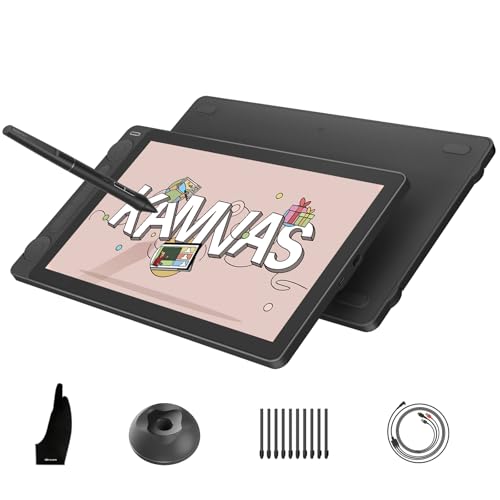
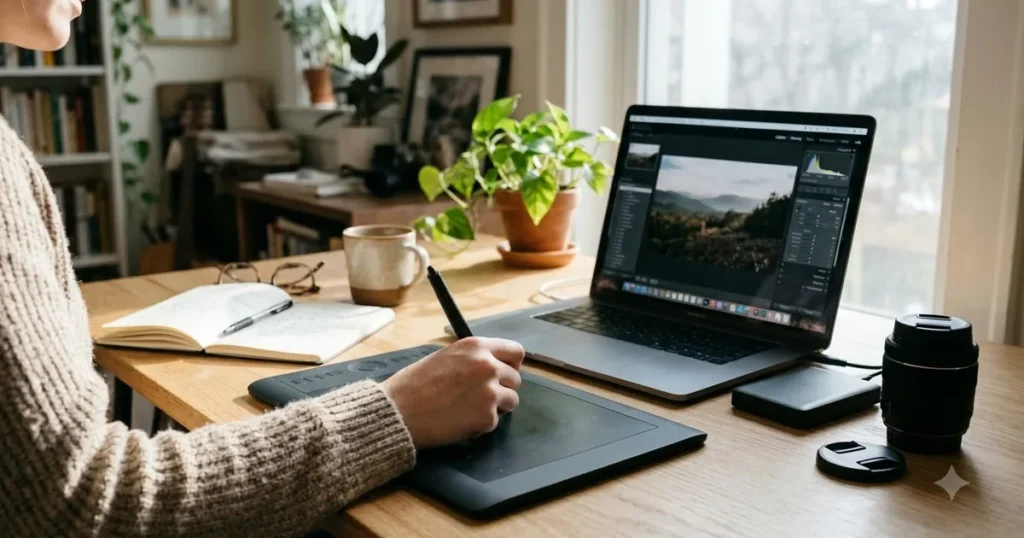
If you are a photographer or digital artist looking to enhance your editing workflow, a drawing tablet can be a game-changer. Unlike a mouse, a drawing tablet with a screen allows you to use a stylus directly on the display, giving you precise control over retouching, masking, and painting. In this guide, we have reviewed 5 of the best drawing tablet for photo editing in November 2026. We focused on models from HUION, XP-Pen, Wacom that offer excellent color accuracy, pressure sensitivity, and build quality. Whether you are a professional retoucher or a hobbyist, our curated list will help you find the perfect tool for your photo editing needs. Check out our complete collection of drawing tablet reviews for more options.
Photo editing demands a tablet with high color fidelity, responsive pen input, and a comfortable working area. In 2026, the market offers advanced features like laminated screens and high sRGB coverage, making it easier than ever to achieve professional results.
At a Glance
| Product | Brand | Rating | Where to buy |
|---|---|---|---|
| Huion Kamvas 13 Gen 3 16K Pen Display | HUION | 4 / 5 | View on Amazon |
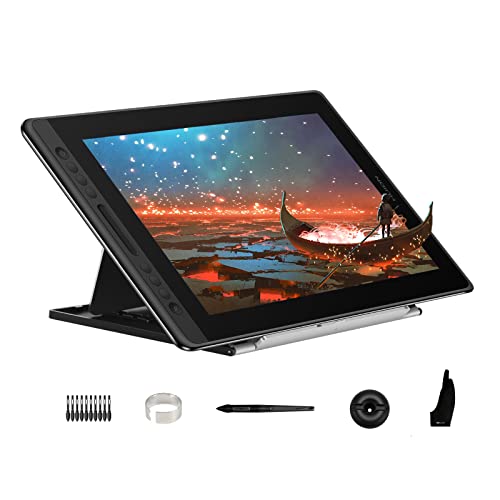
| Huion Kamvas Pro 16 15.6-Inch Pen Display | HUION | 4.9 / 5 | View on Amazon |
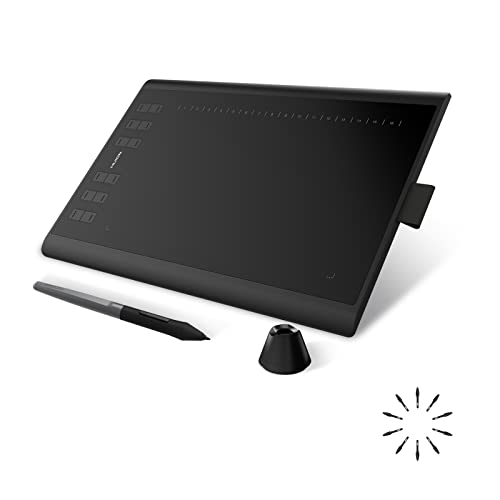
| Huion Inspiroy H1060P 10x6.25in Drawing Tablet | HUION | 4.6 / 5 | View on Amazon |
| Wacom Intuos Small Wired Drawing Tablet | Wacom | 4.3 / 5 | View on Amazon |
| XPPen Deco 01 V3 10x6 Drawing Tablet | XP-Pen | 4.9 / 5 | View on Amazon |
Ratings come from the Amazon listings when we last checked and can change.
Pros
- 16,000 levels of pen pressure for nuanced control
- Fully laminated screen reduces parallax and glare
- Tilt auto-alignment maintains line consistency
- Stable pen nib resists wear
Pros
- Fully laminated screen reduces parallax for precise cursor alignment
- 120% sRGB color gamut provides vibrant and accurate colors
- Touch bar offers quick access to shortcuts and controls
- Ergonomic ST200 stand adjusts from 20 to 60 degrees for comfortable viewing
Cons
- Not a standalone device; must be connected to a computer with HDMI and USB ports
- Driver installation may require removing other brands' drivers and running as administrator
- Connection may need an adapter if your computer lacks HDMI or USB ports
Pros
- 28 customizable press keys for efficient workflow
- Slim design with integrated pen loop for portability
- Broad OS compatibility including Linux (Ubuntu with Xorg)
- Battery-free pen eliminates charging needs
- Includes USB-C adapter and extra pen nibs
Cons
- Not compatible with iOS devices (iPhone/iPad)
- Android use requires OTG support and Android 6.0 or later
- Linux support limited to Xorg display server (Wayland not supported)
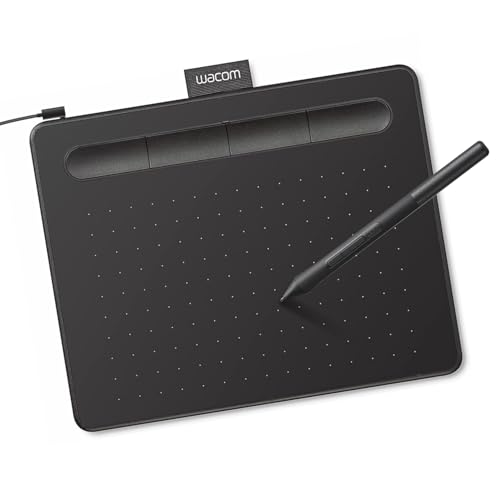
Pros
- Lightweight and accurate pen with super precision
- Included creative software and online tutorials for beginners
- Compatible with Mac, PC, Chromebook, and select Android devices
Cons
- Wired connection limits placement flexibility
- Small active area may feel restrictive for detailed work

Pros
- 16,384 pressure levels capture fine strokes and smooth shading without lag
- Battery-free stylus and USB-powered tablet mean no charging before use
- Works with Windows, macOS, Android, Chrome OS, and Linux, including an included OTG adapter
- Left-handed users can rotate the tablet 180 degrees in driver settings
- Includes 8 shortcut keys for quick access to frequently used actions
Cons
- No built-in display, so work appears on a connected monitor or phone screen and it can't be used standalone
- Requires a wired USB connection for power and data, limiting cable-free placement
Best Drawing Tablet For Photo Editing Buying Guide for 2026
Color Accuracy and Screen Quality
For photo editing, the screen’s ability to display colors accurately is paramount. Look for a drawing tablet with a high sRGB or Adobe RGB coverage. The HUION Kamvas Pro 16 Drawing Tablet offers 120% sRGB, which means it can reproduce a wider gamut than standard sRGB, ensuring your edits look vibrant and true-to-life. The HUION Kamvas 13 (Gen 3) Drawing Tablet with Screen features a Full Laminated Screen that reduces glare and enhances clarity. Both models provide excellent color performance for demanding photo editing tasks.
Pen Pressure Sensitivity and Tilt
Pressure sensitivity determines how accurately the tablet registers the force you apply to the stylus. The Kamvas 13 (Gen 3) boasts 16K levels of pen pressure, allowing for incredibly nuanced brush strokes and opacity changes. Additionally, Tilt Auto-alignment ensures that your pen angle is correctly interpreted, which is essential for natural shading and calligraphy. The Kamvas Pro 16 also supports tilt recognition, giving you full control over your editing tools.
Screen Size and Resolution
The screen size affects your working area and comfort. A larger screen like the 15.6-inch Kamvas Pro 16 provides ample space for palettes and toolbars, making it ideal for studio setups. The 13-inch Kamvas 13 is more portable and still offers a generous drawing area. Both tablets feature high-resolution displays that ensure sharp details and smooth gradients, crucial for precise photo retouching.
Compatibility and Software
Both HUION tablets are compatible with major operating systems including Windows, macOS, and some Linux distributions. They work seamlessly with popular photo editing software like Adobe Photoshop, Lightroom, and Affinity Photo. The Kamvas Pro 16 requires a computer with HDMI and USB ports for connection, while the Kamvas 13 (Gen 3) also needs a wired connection. Ensure your system meets the requirements before purchase.
Build Quality and Design
A sturdy build ensures longevity and a pleasant user experience. The Kamvas 13 (Gen 3) features an All-New Canvas Glass surface that feels smooth and durable, while the laminated screen reduces fingerprints and scratches. The Kamvas Pro 16 includes a Touch Bar for quick access to shortcuts, enhancing your workflow. Both tablets have sleek, modern designs that fit well in any workspace.
Connectivity and Ports
Reliable connectivity is essential for uninterrupted editing. Both models use USB-C or HDMI connections (check specific models). The Kamvas Pro 16 offers a USB-C port for data and power, simplifying your desk setup. The Kamvas 13 (Gen 3) uses a 3-in-1 cable for video, data, and power. Make sure your computer has the necessary ports or adapters.
| Feature | HUION Kamvas 13 (Gen 3) | HUION Kamvas Pro 16 |
|---|---|---|
| Screen Size | 13 inches | 15.6 inches |
| Color Gamut | Standard sRGB (laminated screen) | 120% sRGB |
| Tilt Support | Yes (Tilt Auto-alignment) | Yes |
| Special Features | Full Laminated Screen, Canvas Glass | Touch Bar |
| Portability | More portable | Less portable, larger |
Why You Should Trust Us
At DrawingTabletWiki, we are committed to providing unbiased, data-driven reviews. Our team of experienced photographers and digital artists evaluates each drawing tablet based on objective criteria such as color accuracy, pressure sensitivity, build quality, and value. Our goal is to help you make an informed decision without marketing hype.
Final Thoughts
After reviewing the top models, we have clear recommendations for different needs. For the best overall drawing tablet for photo editing, we recommend the HUION Kamvas Pro 16 Drawing Tablet. Its larger 15.6-inch screen with 120% sRGB coverage provides exceptional color accuracy and a spacious work area, making it ideal for professional photo editors who work in a studio environment. The Touch Bar adds convenience, and the build quality is top-notch.
For those seeking the best value, the HUION Kamvas 13 (Gen 3) Drawing Tablet with Screen is an excellent choice. It offers 16K pressure levels, a laminated screen, and a compact size that is easy to carry. Despite its smaller screen, it delivers professional-grade performance at a more accessible price point. It is perfect for photo editors who need a portable solution without compromising on quality.
If you are looking for a specific use case, such as on-the-go editing, the Kamvas 13 is the best travel companion. For studio work with the highest color fidelity, the Kamvas Pro 16 is unbeatable. Both tablets from HUION, XP-Pen, Wacom represent the best drawing tablet for photo editing in 2026. For more options, explore our best drawing tablets category.
Frequently Asked Questions
What is the best drawing tablet for photo editing in 2026?
The best drawing tablet for photo editing depends on your specific needs. For overall performance and color accuracy, the HUION Kamvas Pro 16 is our top pick. For portability and value, the HUION Kamvas 13 (Gen 3) is an excellent choice. Both are featured in our best drawing tablets guide.
What should I look for in a drawing tablet for photo editing?
Key factors include color accuracy (sRGB/Adobe RGB coverage), pressure sensitivity levels, screen size and resolution, compatibility with your software, and build quality. A tablet with a laminated screen can reduce glare, and tilt support enhances natural drawing.
Can I use a drawing tablet without a computer?
Most drawing tablets with screens, including the HUION Kamvas 13 and Kamvas Pro 16, require a connection to a computer to function. They are not standalone devices. Ensure your computer has the necessary ports (HDMI, USB) for connection.
What is the difference between a drawing tablet and a display tablet?
A drawing tablet without a screen (pen tablet) requires you to look at your computer monitor while drawing. A display tablet (like the ones reviewed here) has an integrated screen, allowing you to draw directly on the display. Display tablets are generally preferred for photo editing because they offer a more intuitive experience.
How important is pressure sensitivity for photo editing?
Pressure sensitivity is crucial for tasks like dodging and burning, masking, and brushwork. Higher pressure levels (like 16K on the Kamvas 13) allow for finer control over opacity and brush size, making your edits more precise and natural.